Celebrating community: The legacy of All City American Indian and Alaska Native Celebration
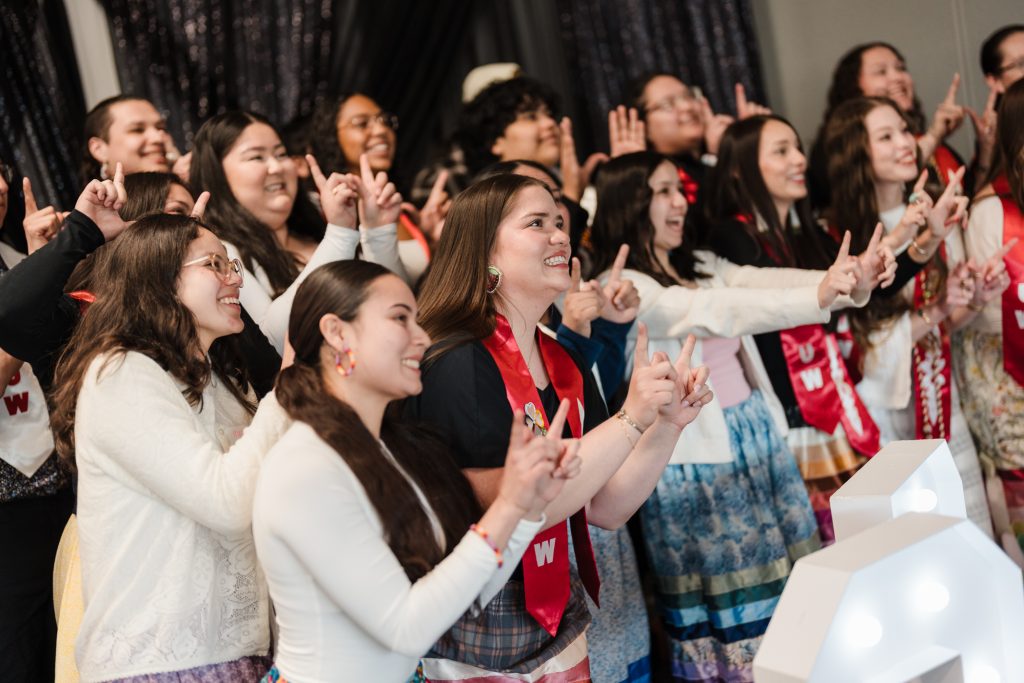 Twenty years later, this ceremony continues to build community and connections across the Madison area. Younger students can connect with older students, and families have the opportunity to celebrate together. Not only is this celebration vital to sustaining and strengthening external relationships with neighboring colleges, it’s necessary for cultural reconstruction and wellbeing of Native scholars.
The role of the Indigenous Student Center
The ISC represents UW–Madison on the All City Planning Committee to ensure that student voices and cultural priorities remain central to the event. This collaboration has been especially important in preserving traditions, such as the creation of ceremonial stoles by APiO.
Since the event’s inception, APiO sisters have designed and crafted the distinctive stoles that graduates receive. Bobbi Skenandore, an APiO sister and current Native Nations UW coordinator, has helped carry this legacy forward:
“Making the stoles for All City is one of the traditions that I love to do as a sister of Alpha Pi Omega Sorority… It’s so fabulous to be able to come together with other sisters around the time of All City to craft and catch up. It’s something that we can count on every year.” Skenandore shared.
Through this work, the ISC ensures that cultural continuity isn’t lost—that traditions endure, and that each new generation inherits something meaningful.
These moments—youth singing, families watching, students honored—capture what All City represents at its core: the living presence of culture within education.
Leadership in community
For leaders like Victoria Kahite, program coordinator within the Centers for Student Success and Belonging, the work within the ISC and All City is both a professional responsibility and a deeply personal commitment. Kahite understands its power not just as a ceremony, but as a space where identity, community, and education come together.
“I grew up in Red Cliff, Wisconsin, and in 2020 I made the exciting but difficult decision to attend UW–Madison.” Kahite shared. “Like many students leaving home for the first time, I had to step away from what was familiar—but for me, that meant more than distance. It meant sacrificing daily connection to my culture in exchange for the opportunity to pursue a degree. While I had heard about the challenges of leaving home, I didn’t fully understand them until I experienced that sense of disconnect for myself. My mind was focused on building a future in Madison, but my heart remained deeply tied to home.”
Kahite continued, “That feeling came full circle when I was honored at the 2025 All City Celebration and my mom was able to visit from Red Cliff for the first time since I started college. Surrounded by community, hearing the drum, and celebrating together, I felt a powerful sense of wholeness—like the person I was when I left home finally reconnected with who I was becoming. That experience, and the people who made it possible, shaped my passion for my work today. As a professional staff member, I’m committed to advancing belonging for students, just as others did for me, and to creating meaningful experiences that affirm who they are while they pursue all they can become.”
Twenty years later, this ceremony continues to build community and connections across the Madison area. Younger students can connect with older students, and families have the opportunity to celebrate together. Not only is this celebration vital to sustaining and strengthening external relationships with neighboring colleges, it’s necessary for cultural reconstruction and wellbeing of Native scholars.
The role of the Indigenous Student Center
The ISC represents UW–Madison on the All City Planning Committee to ensure that student voices and cultural priorities remain central to the event. This collaboration has been especially important in preserving traditions, such as the creation of ceremonial stoles by APiO.
Since the event’s inception, APiO sisters have designed and crafted the distinctive stoles that graduates receive. Bobbi Skenandore, an APiO sister and current Native Nations UW coordinator, has helped carry this legacy forward:
“Making the stoles for All City is one of the traditions that I love to do as a sister of Alpha Pi Omega Sorority… It’s so fabulous to be able to come together with other sisters around the time of All City to craft and catch up. It’s something that we can count on every year.” Skenandore shared.
Through this work, the ISC ensures that cultural continuity isn’t lost—that traditions endure, and that each new generation inherits something meaningful.
These moments—youth singing, families watching, students honored—capture what All City represents at its core: the living presence of culture within education.
Leadership in community
For leaders like Victoria Kahite, program coordinator within the Centers for Student Success and Belonging, the work within the ISC and All City is both a professional responsibility and a deeply personal commitment. Kahite understands its power not just as a ceremony, but as a space where identity, community, and education come together.
“I grew up in Red Cliff, Wisconsin, and in 2020 I made the exciting but difficult decision to attend UW–Madison.” Kahite shared. “Like many students leaving home for the first time, I had to step away from what was familiar—but for me, that meant more than distance. It meant sacrificing daily connection to my culture in exchange for the opportunity to pursue a degree. While I had heard about the challenges of leaving home, I didn’t fully understand them until I experienced that sense of disconnect for myself. My mind was focused on building a future in Madison, but my heart remained deeply tied to home.”
Kahite continued, “That feeling came full circle when I was honored at the 2025 All City Celebration and my mom was able to visit from Red Cliff for the first time since I started college. Surrounded by community, hearing the drum, and celebrating together, I felt a powerful sense of wholeness—like the person I was when I left home finally reconnected with who I was becoming. That experience, and the people who made it possible, shaped my passion for my work today. As a professional staff member, I’m committed to advancing belonging for students, just as others did for me, and to creating meaningful experiences that affirm who they are while they pursue all they can become.”
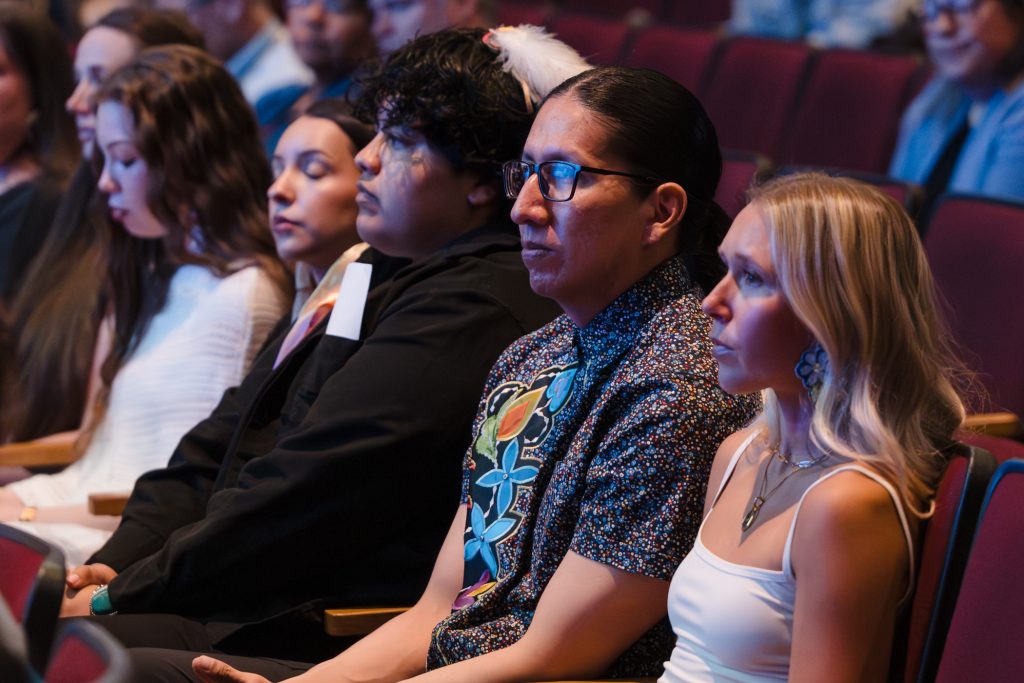
UW graduating seniors pictured from right to left are Keya Eden Allred, Karah LaTender, Miinan White, Eva Weddel, Kane Funmaker, and Miranda Jordan, listening to the speakers.
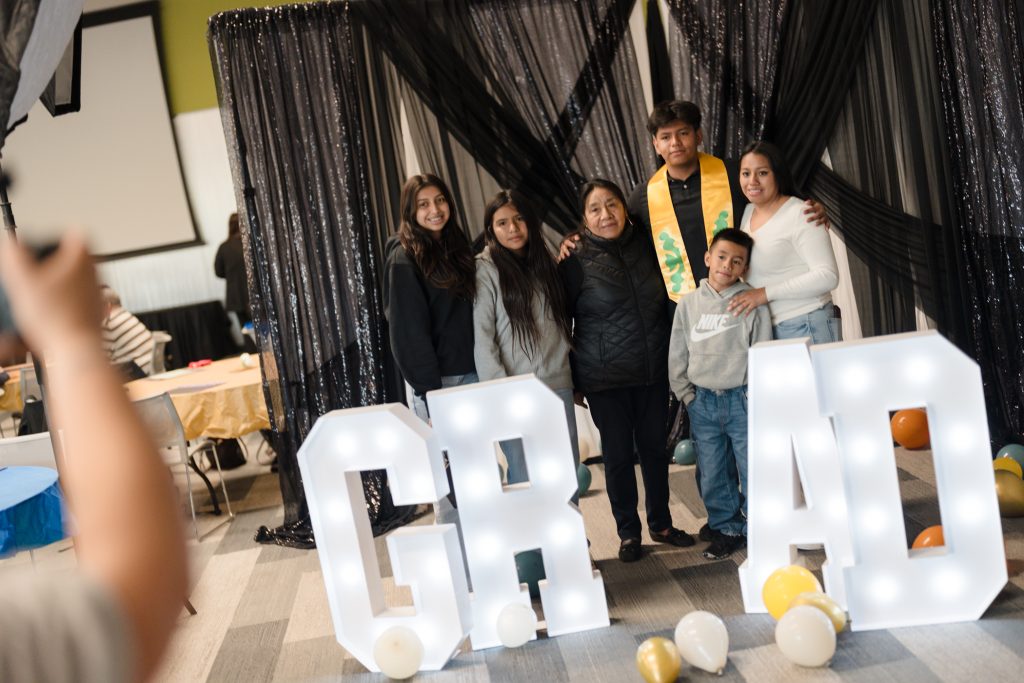
A family of different ages celebrates their graduate with a group picture at the photo booth hosted by Clarissa Friday Photography.
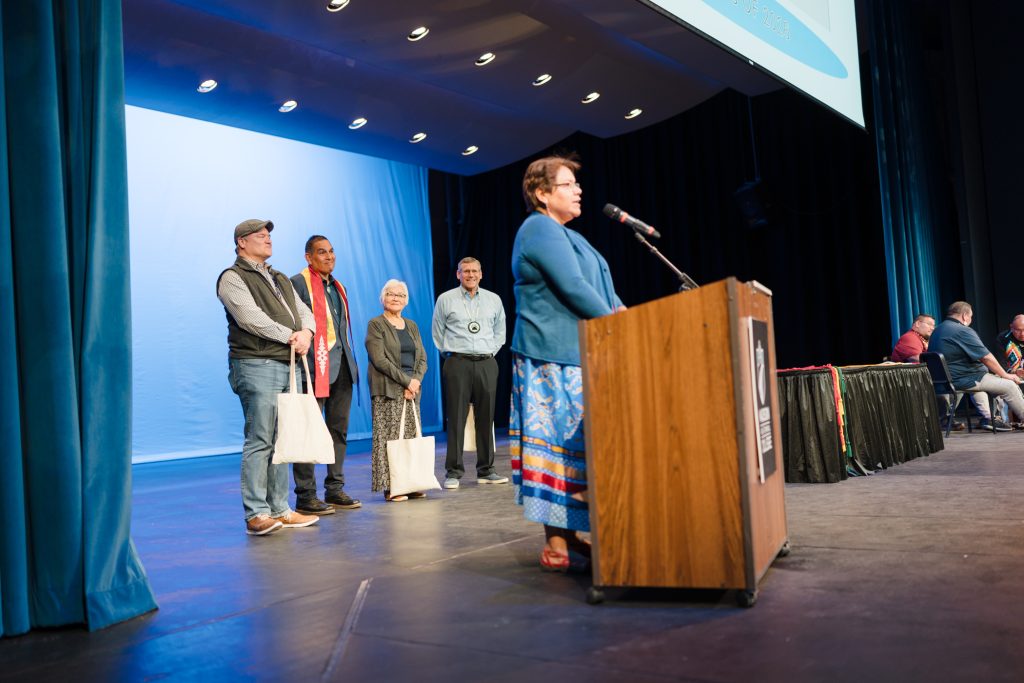
APiO sister, Adrienne Thunder addresses the audience at the podium. Behind her are her fellow All City founders, standing together.
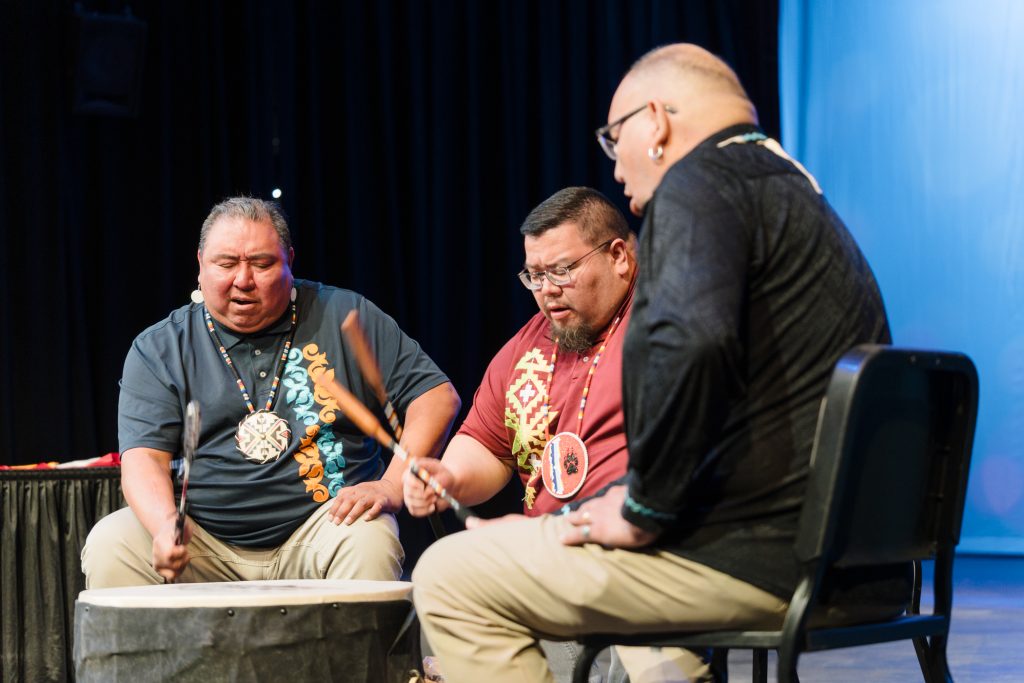
Little Priest Singers, a southern Ho Chunk family drum based in Wisconsin Dells, sings Native American Traditional songs during the All City ceremony.Their hope is to inspire upcoming generations.
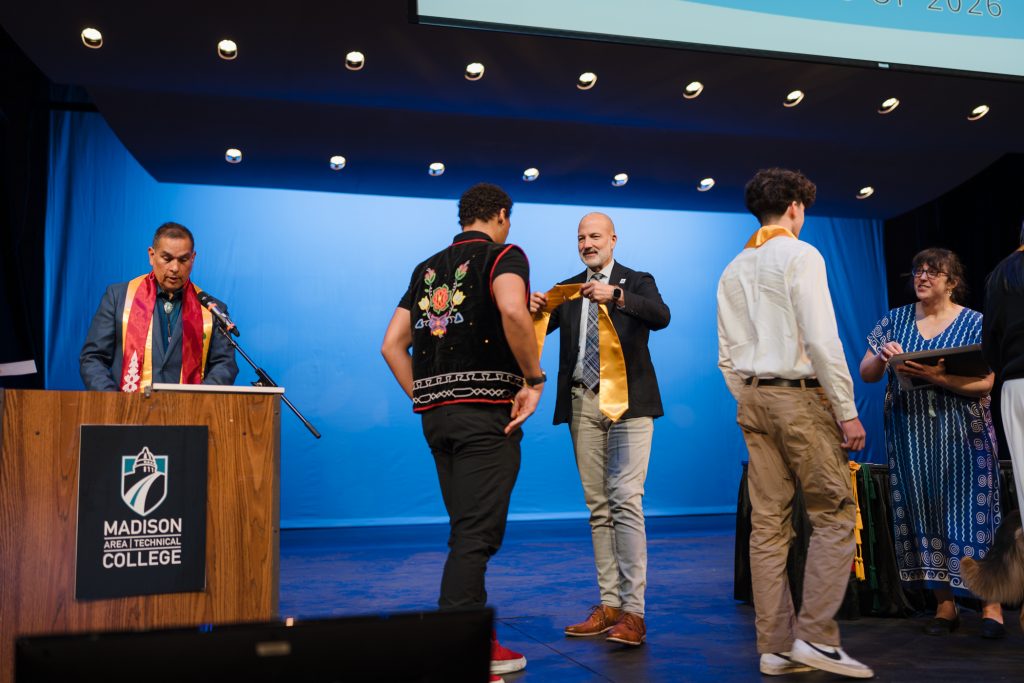
Emcee Aaron Bird Bear and Madison Metropolitan School District superintendent Joe Gothard invites eighth grade students to the stage to receive their stoles and certificates.
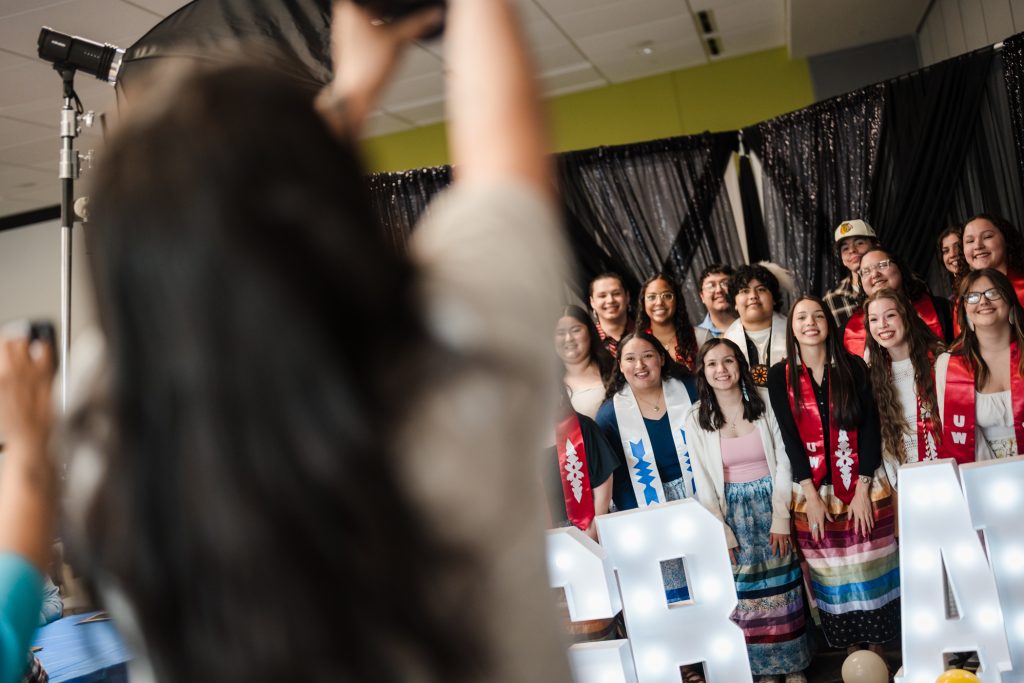
Wunk Sheek members take a group picture at the photo booth hosted by Clarissa Friday Photography.