Fueling every Badger
How UW–Madison staff and students expand food access across campus
By Kaity Steinman
Choosing between gas to get to campus or a full day of meals. Skipping lunch to make a grocery budget stretch. Paying for medication or tuition instead of dinner. These experiences aren’t a college student’s rite of passage. They are ways some Badgers cope when facing food access challenges.
A recent Basic Needs Survey conducted by Student Affairs and the Division of Enrollment Management found that one in four UW–Madison students who reported limited food access in the past 30 days said they experienced moderate to severe hunger. Rising costs of living, paired with college expenses, have forced some Badgers — and students nationwide — to make difficult day-to-day decisions about their basic needs.
Being stuck in a loop of limited food access used to be an everyday reality for UW–Madison graduate student Alyson “Sonny” Christianson. While earning her undergraduate degree at another university, Christianson’s circumstances changed from week to week — often restricted by how much of her paycheck went toward rent. Even though Christianson regularly chose a quick, cheap, or less nutritious meal, she did not consider that she was dealing with food insecurity.
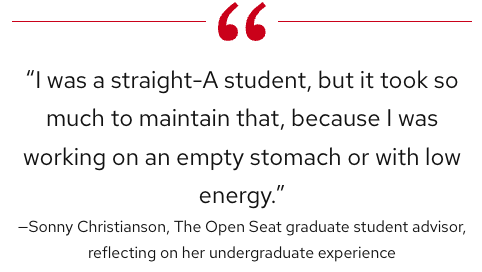
“Everyone talks about living off of ramen in college, so I just thought this was something I was supposed to be feeling,” Christianson says. “I was a straight-A student, but it took so much to maintain that, because I was working on an empty stomach or with low energy.”
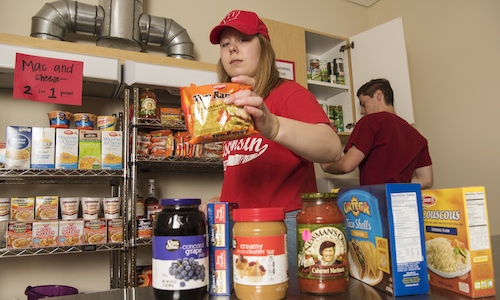
Christianson’s experience with food access now colors every decision she makes as the graduate student advisor for The Open Seat Food Pantry. Part of UW–Madison’s basic needs student support, the student-run, student-serving food pantry is one of multiple emergency assistance and long-term resources that aims to expand food and basic needs access to students around campus.
Student-led solutions
For a decade, The Open Seat has held steadfast to its mission: ensure all Badgers can focus on their education rather than the source of their next meal. Located in the heart of campus at the Student Activity Center (333 East Campus Mall, 3rd floor), the pantry provides nutritious food and hygiene products to undergraduate and graduate students.
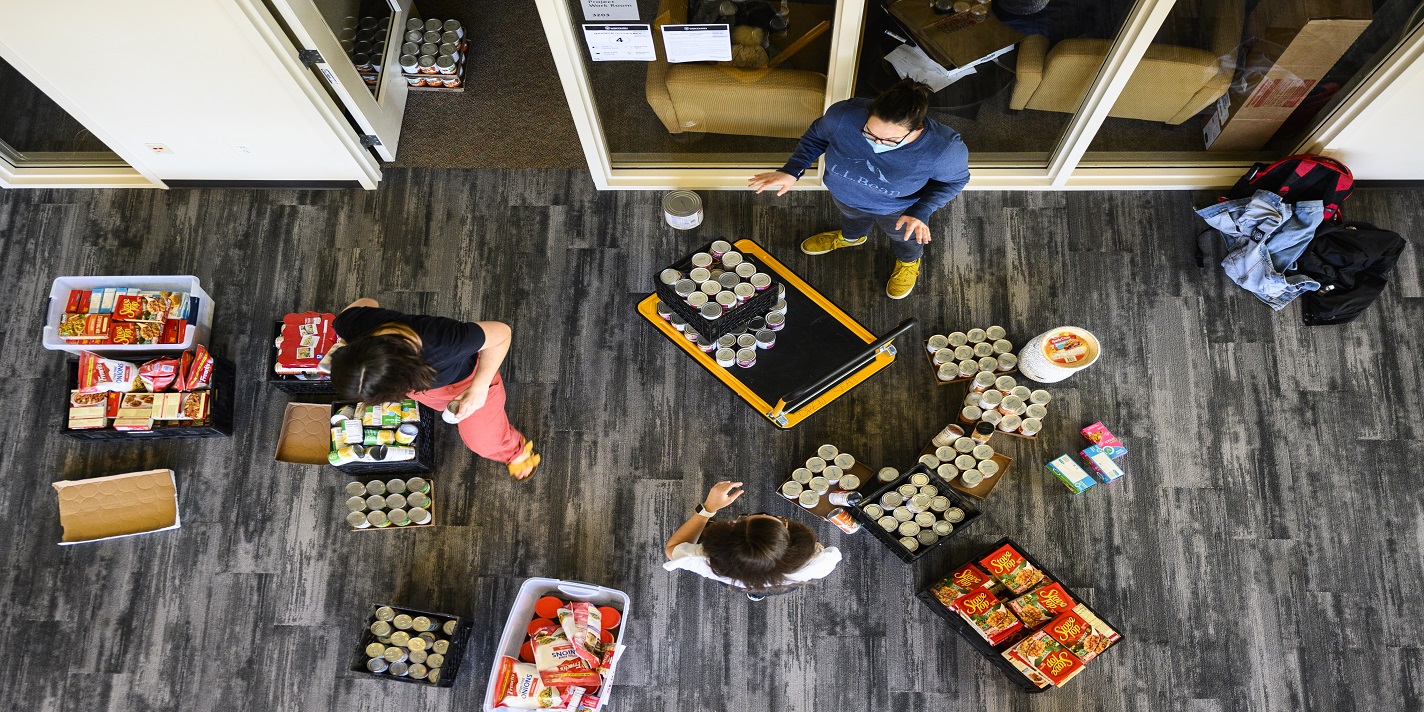
A group of UW–Madison undergraduates partnered with the Associated Students of Madison (ASM) to start and run the pantry, which opened in 2016. The idea took shape from a proposal written two years prior, which pointed to concerns with students’ access to affordable food. Inspired by a successful pantry at UW–Stevens Point, the students believed they didn’t have to wait for someone else to solve this problem. They could bridge the gap themselves.
Since opening, The Open Seat has grown, expanding its reach with weekly food distribution to the Eagle Heights Community Center — located within a University Housing community of apartment buildings where many graduate students and their families live. From October 2025 through October 2026, The Open Seat provided food and supplies to 3,184 households — a nearly 2,500 percent increase in households served per year since the pantry first started gathering limited data in 2018. ASM supports The Open Seat’s student staffing and supplies with a portion of its segregated fee funding.
This year, to better coordinate student support, basic needs case management — previously housed in the Office of Student Financial Aid — moved to the Office of Student Assistance and Support (OSAS). OSAS helps students navigate campus resources and connect with the support they need, including assistance related to food access and other basic needs resources. With resources like the Campus Food Access Fund, through which donors support The Open Seat and other food access initiatives, and leadership from Dean of Students Christina Olstad and OSAS staff, The Open Seat is able to prioritize nutritious food as an essential part to student well-being, belonging, and academic success.
“Our campus community has come together to invest in student success and expand support for students facing food access challenges,” Olstad says. “While we are proud of the progress we’ve made, we know there is still more work to do, and we remain committed to ensuring every Badger has the resources they need to flourish.”
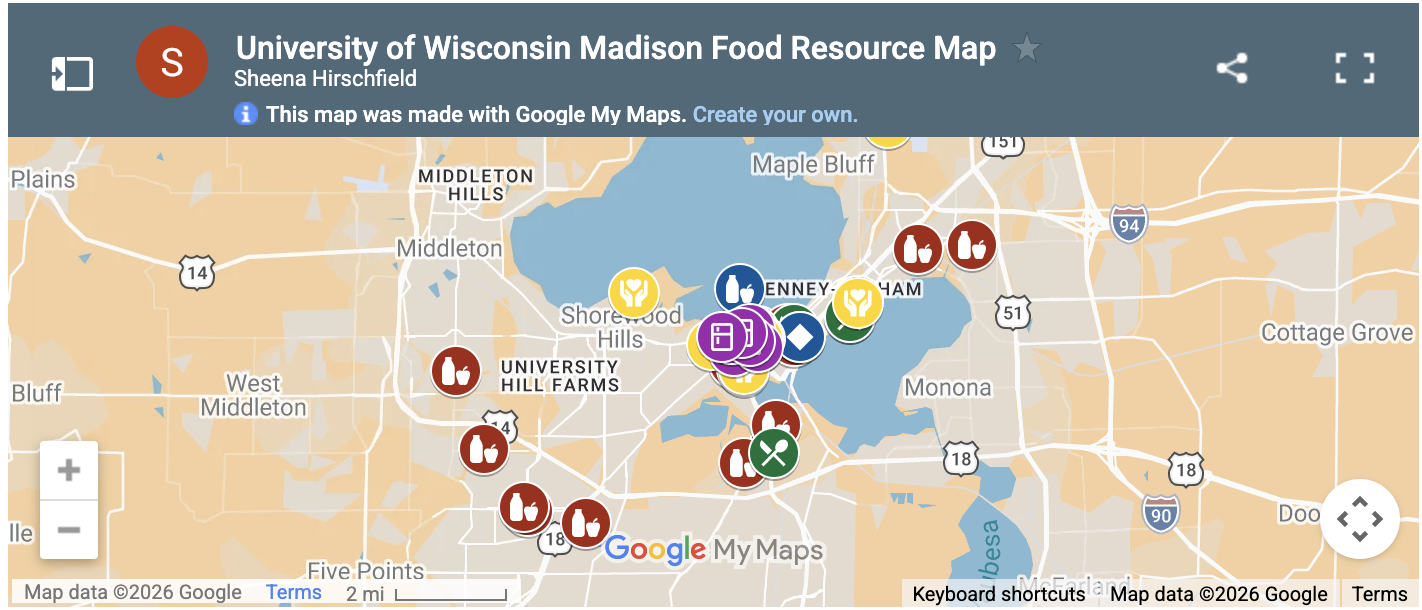
University of Wisconsin—Madison Food Resource Map
To find help close by, students can turn to the Food Resource Map, which shows where to find free meals, food pantries, and community microwaves on campus and around Madison.
Inside The Open Seat
At the helm of the pantry’s operations, Christianson, along with a team of passionate undergraduate staff, take on various responsibilities, like unloading deliveries, cleaning and stocking shelves, and preparing to assist shoppers.
“Working at The Open Seat gives me the chance to return the dignity to an experience and situation that can often make people feel incapable or vulnerable,” Christianson says. “It allows me to give to others what I wish I could’ve had myself.”
Every person who comes to The Open Seat is treated as if it’s their first time, greeted immediately with warmth and genuine care.
How the pantry works
- Check in: Shoppers book an appointment, then a staff member welcomes and checks them in, making sure they understand how the pantry works.
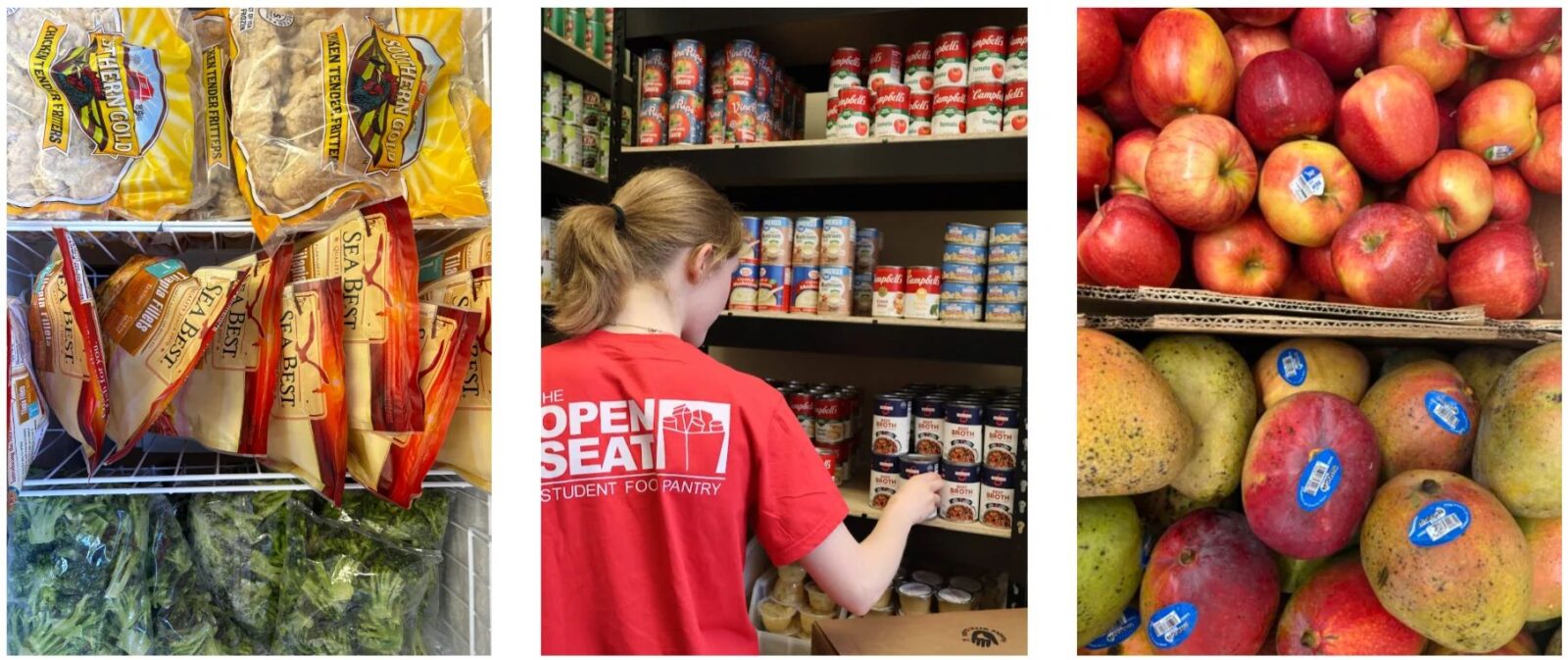
- Choice: Inside, the space is set up like a grocery store, and shoppers choose their own food.
- Limits: A few items like milk, eggs, and frozen foods are limited per shopper. These limits help maintain the pantry’s inventory as shoppers come through each week.
- One simple rule: Shoppers are encouraged to follow the pantry’s guideline: take what you need, use what you take, and be mindful of others.
- Support: Staff are on hand to guide shoppers through the pantry and to answer questions.
Maintaining The Open Seat’s high standards and expanding its capacity is top of mind for UW–Madison alumna Lauren Klann. This fall, she left her role as a food pantry partnership program manager in Kansas City, Mo., to become a student assistance specialist within OSAS to oversee The Open Seat’s operations. With her background in food pantry management and a deep interest in building sustainable, locally rooted food systems, she provides The Open Seat with stability and continuity. Klann’s position was created after the pantry’s undergraduate staff asked for professional support so they could better serve their peers.
“I’m looking at our student staff’s big-picture ideas that they just don’t have time to take on,” Klann says. “I can do the background legwork, like finding and applying for grants, developing awareness campaigns, and other opportunities to help the pantry grow even more.”
An open seat for everyone
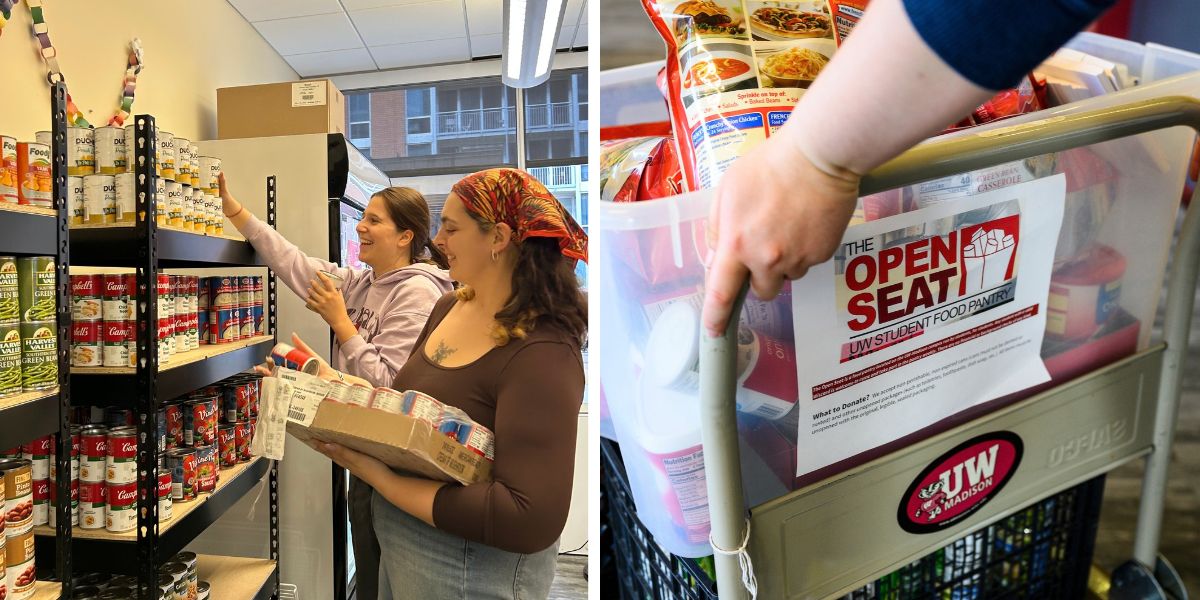
Experiencing limited food access is not simply the lack of food; it’s also the lack of access to nutritionally balanced food. While canned and non-perishable items have become synonymous with food pantries, The Open Seat stocks much more. Through a partnership with the Madison Area Food Pantry’s Forward Garden, shoppers have consistent access to seasonal, fresh produce like mustard greens, bok choy, winter squash, and sweet corn.
Access to nutritious food does more than improve overall health. It opens the door to new opportunities like trying unfamiliar ingredients, finding joy in cooking, and learning to care for yourself — common happenings at nutrition education cooking classes offered in collaboration with The Open Seat and Rec Well at the Bakke Recreation & Wellbeing Center.
“We have regulars that come through the pantry because they know this is a resource that they can use continuously, and that’s what we want to be there for,” Christianson says.
Over time, that trust makes it easier to ask for help — even with something as simple as a recipe. Christianson recalls one regular pantry shopper who wanted to expand their skills in the kitchen and learn how to cook a soft-boiled egg. Christianson pulled up a how-to guide, and the two walked through the steps together. When the shopper returned a few days later, they proudly shared their success. It’s a small win, but it reflects the heart of The Open Seat: being a trusted, reliable resource for students.
“Our mission lives through the pantry’s name,” Christianson says. “There will always be an open seat at our table for anyone who needs it.”
Are you a student in need of help? Navigate personal, academic, or health issues with guidance from the Office of Student Assistance and Support (OSAS). Connect with OSAS by phone, email, or online form. Students can drop in to meet with staff at Bascom Hall, room 70, Mondays through Fridays, 8:30 a.m. to 4 p.m.
Community support makes all the difference
If you are in a position to help, please consider making a gift to the Campus Food Access Fund.
A donation of any amount sustains vital basic needs resources such as The Open Seat Food Pantry.