Two First-Gen Badgers Finding Their Way
This National First-Generation Day at UW–Madison celebrates first-generation college students in our Badger community. These students contribute unique perspectives and resilience while often navigating challenges without family roadmaps. Two students, one just beginning her journey and the other now hitting her stride after nearly leaving, show us what it means to persist, find community, and truly become a Badger.
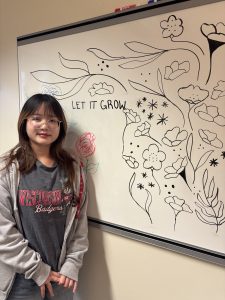 On her first day of class, freshman De Chia Khang was carrying more than a backpack. As a first-generation college student, she was stepping into a place her family hadn’t navigated before. She is the youngest among seven siblings who grew up in a Hmong immigrant family that arrived in the United States in 2007 and settled in Milwaukee. For Khang, enrolling at UW–Madison with support from Bucky’s Pell Pathway, represented independence, a step she saw as both a personal milestone and a turning point for her family. She’s now studying biology and is building a community beyond the one she left.
Valerey Aguirre is a first-generation college student and junior from Los Angeles. She came to UW–Madison two years ago and is proud that she’s still here. She was accepted through UW–Madison’s Posse Program, earning a full-tuition scholarship and committing early on, though she expressed that the reality of attending a school halfway across the country was daunting.
On her first day of class, freshman De Chia Khang was carrying more than a backpack. As a first-generation college student, she was stepping into a place her family hadn’t navigated before. She is the youngest among seven siblings who grew up in a Hmong immigrant family that arrived in the United States in 2007 and settled in Milwaukee. For Khang, enrolling at UW–Madison with support from Bucky’s Pell Pathway, represented independence, a step she saw as both a personal milestone and a turning point for her family. She’s now studying biology and is building a community beyond the one she left.
Valerey Aguirre is a first-generation college student and junior from Los Angeles. She came to UW–Madison two years ago and is proud that she’s still here. She was accepted through UW–Madison’s Posse Program, earning a full-tuition scholarship and committing early on, though she expressed that the reality of attending a school halfway across the country was daunting.
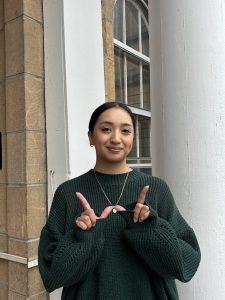 “I had hoped to find a community when I got here. That was the biggest thing that scared me,” Aguirre recalled. She wanted what she had back home, spaces where she could be herself and with people who looked like her. Now, she’s pursuing four majors: psychology, Spanish, Chicanx/e & Latinx/e Studies, and Latin American, Caribbean, and Iberian Studies.
When scholarships mean everything
Khang describes college as a “stepping stone” that her family encouraged. Being both first-gen and an immigrant meant handling adult responsibilities early. Growing up, Khang helped her parents with health insurance forms and, most recently, wrestled with the Free Application for Federal Student Aid (FAFSA) application that didn’t come with easy translations. Still, she was determined to find a way to afford UW–Madison.
“I didn’t want to come here if my parents had to pay out-of-pocket. I don’t want that burden on them,” Khang said. “There’s so much they have already sacrificed for me.”
For Aguirre, scholarships didn’t just open doors, they made UW–Madison possible in the first place. “I came here through scholarships; otherwise, I wouldn’t know about the school,” she said. “It helps us move forward from a situation that I grew up in.” That situation meant sharing a room with siblings and never having her own space to think or grow.
“Coming here, now I have my own space,” Aguirre shared. “My way to discover who I am. Be independent. Here I have so much freedom compared to what I had at home. I can discover what I want to do here.”
The first few weeks
For Khang, the first few weeks brought unexpected isolation. Coming from a charter school where Hmong culture was woven into daily life, she found herself among few Hmong peers and was often mistaken for Chinese. Beyond questions of belonging, she was learning to navigate a new kind of freedom, creating her own schedule while managing academic demands that far exceeded high school.
Aguirre remembers, to this day, what it was like setting foot on campus in fall 2023. She skipped her first three classes, was overwhelmed with anxiety that she didn’t belong here, and was convinced she needed to go home. She recalled, “My mom was open to me coming back, but I knew I needed to find other people to talk to and get support. The first few weeks were rough because I didn’t have a community yet.”
Finding their place
Instead of withdrawing, Aguirre talked to her Posse director and also connected with the McBurney Disability Resource Center. After several meetings and hard conversations, she ultimately decided to stay.Aguirre started to build momentum: showing up to classes, joining organizations where she felt she belonged, and connecting with a Posse mentor, who said four simple words to her: “You can do it.” She found her community in student organizations like Fuego Dance Crew, Lambda Theta Alpha Latin Sorority, Inc., and ChiLaCSA. By her second semester of freshman year, the student who almost left had madethe Dean’s List.
For Khang, the social connections she wanted came slowly, through classes and joining organizations that centered Asian-American culture. This independence she sought required a new skill, the confidence to speak up and step out of her comfort zone. Khang found belonging through Hmong American Student Association (HASA) and Asian American InterVarsity, a faith community that connects identity with purpose.
What made the difference
For both Khang and Aguirre, academic support, financial resources, and mental health support are needs, not wants.
Khang is only a few months in, but the resources she’s accessed through Center for Educational Opportunity (CeO) — including her advisor and taking a HIP course required for first-year scholars — have been essential in making this big campus feel small. She also credits Counseling Psychology 115 and Student Orientation Advising & Registration (SOAR), which introduced an array of campus resources.
Aguirre appreciated the resources that helped her when she needed them the most, including Open Seat food pantry, emergency financial support, BadgerFARE, and tutoring services. Without these programsand services, she said she would have gone home.
Aguirre hopes to see more spaces where first-gen students can connect with each other. “Whether it’s weekly events, lunch gatherings, or socializing, I think these are beneficial for connection. It’s hard enough for first-gen students to come out of their shell, but if we can share each other’s stories and help them realize they are not alone, it can really help.”
Carrying home forward
Both Khang and Aguirre are navigating their lives as Badgers while still honoring where they came from. Khang underwent heart surgery as a child, an experience that profoundly influenced her life and highlighted the extent of her parents’ sacrifices for her. She openly shared that they prioritized her heart surgery above their own health needs without a second thought.
Aguirre now shares laughs with her mom about how often she called home during that first year, now recognizing that distance helped lead to personal growth. She’s enjoying the freedom of carving out her own unique journey. “UW–Madison allows you to explore so many pathways and different programs,” Aguirre said. “Knowing I had this freedom made it easy [to pursue 4 majors].”
Now
Khang is already planning ahead. She’s proud of “making it here,” especially after relatives urged her to stay in the Milwaukee area. She’s interested in studying abroad — possibly in Vietnam, where family ties run deep. Behind her lighthearted comment that one day she’ll repeatedly tell her brothers, “See? I did it!” is a genuine desire to make her parents proud.
On a typical Thursday, Khang is riding her scooter, a thoughtful gift from one of her older brothers. It’s a hectic day, where her schedule is packed tight with back-to-back classes followed by her internship, but she thrives on the energy of her busy routine. Her best friend even stops by while she’s working to drop off food for her. Khang is figuring out how to balance the independence she still craves with the connections that keep her grounded.
Across campus, Aguirre has wrapped up her classes in Spanish, psychology, and Chicanx/e & Latinx/e studies – subjects that keep her connected to her roots. She’s meeting up with friends to study, the same people from the student organizations she joined who have become her community. Amidst the academic hustle, she still finds joy in calling her mom at the end of the day. Aguirre has transformed from “I almost left” to “I’m still here.” She now mentors new students the way others mentored her, including sharing practical advice, answering late-night texts, and repeating the words that steadied her: “You can do it.” When she pictures graduation in spring 2027, she sees herself pursuing a master’s degree and proving to her younger self that she belonged all along.
What it means to be a Badger
Khang and Aguirre, along with thousands of first-gen students at UW–Madison, share the experience of balancing pride with pressure and translating freedom into stability. Both are interns helping build the new office within Student Affairs focused on first-generation and limited-income students, to ensure those who come after them receive the support they need. This National First-Generation Day we celebrate not just their achievements, but the perspectives they share and the ways they continue to shape what it means to be part of the Badger family.
“I had hoped to find a community when I got here. That was the biggest thing that scared me,” Aguirre recalled. She wanted what she had back home, spaces where she could be herself and with people who looked like her. Now, she’s pursuing four majors: psychology, Spanish, Chicanx/e & Latinx/e Studies, and Latin American, Caribbean, and Iberian Studies.
When scholarships mean everything
Khang describes college as a “stepping stone” that her family encouraged. Being both first-gen and an immigrant meant handling adult responsibilities early. Growing up, Khang helped her parents with health insurance forms and, most recently, wrestled with the Free Application for Federal Student Aid (FAFSA) application that didn’t come with easy translations. Still, she was determined to find a way to afford UW–Madison.
“I didn’t want to come here if my parents had to pay out-of-pocket. I don’t want that burden on them,” Khang said. “There’s so much they have already sacrificed for me.”
For Aguirre, scholarships didn’t just open doors, they made UW–Madison possible in the first place. “I came here through scholarships; otherwise, I wouldn’t know about the school,” she said. “It helps us move forward from a situation that I grew up in.” That situation meant sharing a room with siblings and never having her own space to think or grow.
“Coming here, now I have my own space,” Aguirre shared. “My way to discover who I am. Be independent. Here I have so much freedom compared to what I had at home. I can discover what I want to do here.”
The first few weeks
For Khang, the first few weeks brought unexpected isolation. Coming from a charter school where Hmong culture was woven into daily life, she found herself among few Hmong peers and was often mistaken for Chinese. Beyond questions of belonging, she was learning to navigate a new kind of freedom, creating her own schedule while managing academic demands that far exceeded high school.
Aguirre remembers, to this day, what it was like setting foot on campus in fall 2023. She skipped her first three classes, was overwhelmed with anxiety that she didn’t belong here, and was convinced she needed to go home. She recalled, “My mom was open to me coming back, but I knew I needed to find other people to talk to and get support. The first few weeks were rough because I didn’t have a community yet.”
Finding their place
Instead of withdrawing, Aguirre talked to her Posse director and also connected with the McBurney Disability Resource Center. After several meetings and hard conversations, she ultimately decided to stay.Aguirre started to build momentum: showing up to classes, joining organizations where she felt she belonged, and connecting with a Posse mentor, who said four simple words to her: “You can do it.” She found her community in student organizations like Fuego Dance Crew, Lambda Theta Alpha Latin Sorority, Inc., and ChiLaCSA. By her second semester of freshman year, the student who almost left had madethe Dean’s List.
For Khang, the social connections she wanted came slowly, through classes and joining organizations that centered Asian-American culture. This independence she sought required a new skill, the confidence to speak up and step out of her comfort zone. Khang found belonging through Hmong American Student Association (HASA) and Asian American InterVarsity, a faith community that connects identity with purpose.
What made the difference
For both Khang and Aguirre, academic support, financial resources, and mental health support are needs, not wants.
Khang is only a few months in, but the resources she’s accessed through Center for Educational Opportunity (CeO) — including her advisor and taking a HIP course required for first-year scholars — have been essential in making this big campus feel small. She also credits Counseling Psychology 115 and Student Orientation Advising & Registration (SOAR), which introduced an array of campus resources.
Aguirre appreciated the resources that helped her when she needed them the most, including Open Seat food pantry, emergency financial support, BadgerFARE, and tutoring services. Without these programsand services, she said she would have gone home.
Aguirre hopes to see more spaces where first-gen students can connect with each other. “Whether it’s weekly events, lunch gatherings, or socializing, I think these are beneficial for connection. It’s hard enough for first-gen students to come out of their shell, but if we can share each other’s stories and help them realize they are not alone, it can really help.”
Carrying home forward
Both Khang and Aguirre are navigating their lives as Badgers while still honoring where they came from. Khang underwent heart surgery as a child, an experience that profoundly influenced her life and highlighted the extent of her parents’ sacrifices for her. She openly shared that they prioritized her heart surgery above their own health needs without a second thought.
Aguirre now shares laughs with her mom about how often she called home during that first year, now recognizing that distance helped lead to personal growth. She’s enjoying the freedom of carving out her own unique journey. “UW–Madison allows you to explore so many pathways and different programs,” Aguirre said. “Knowing I had this freedom made it easy [to pursue 4 majors].”
Now
Khang is already planning ahead. She’s proud of “making it here,” especially after relatives urged her to stay in the Milwaukee area. She’s interested in studying abroad — possibly in Vietnam, where family ties run deep. Behind her lighthearted comment that one day she’ll repeatedly tell her brothers, “See? I did it!” is a genuine desire to make her parents proud.
On a typical Thursday, Khang is riding her scooter, a thoughtful gift from one of her older brothers. It’s a hectic day, where her schedule is packed tight with back-to-back classes followed by her internship, but she thrives on the energy of her busy routine. Her best friend even stops by while she’s working to drop off food for her. Khang is figuring out how to balance the independence she still craves with the connections that keep her grounded.
Across campus, Aguirre has wrapped up her classes in Spanish, psychology, and Chicanx/e & Latinx/e studies – subjects that keep her connected to her roots. She’s meeting up with friends to study, the same people from the student organizations she joined who have become her community. Amidst the academic hustle, she still finds joy in calling her mom at the end of the day. Aguirre has transformed from “I almost left” to “I’m still here.” She now mentors new students the way others mentored her, including sharing practical advice, answering late-night texts, and repeating the words that steadied her: “You can do it.” When she pictures graduation in spring 2027, she sees herself pursuing a master’s degree and proving to her younger self that she belonged all along.
What it means to be a Badger
Khang and Aguirre, along with thousands of first-gen students at UW–Madison, share the experience of balancing pride with pressure and translating freedom into stability. Both are interns helping build the new office within Student Affairs focused on first-generation and limited-income students, to ensure those who come after them receive the support they need. This National First-Generation Day we celebrate not just their achievements, but the perspectives they share and the ways they continue to shape what it means to be part of the Badger family.
De Chia Khang, first-year Badger and first-generation student at UW–Madison
Valerey Aguirre, junior and first-generation student at UW–Madison